When you purchase through link on our site , we may earn an affiliate deputation . Here ’s how it works .
Your day-by-day horoscope : If it ’s your birthday today ( or any other twenty-four hours ) , congratulations ! You are very golden . You were bear into a universe of endless mystery and wonder — a huge and busy property where Galax urceolata eat each other for fun and old suns break loose into imperial rainbows of gas whenever they get too tired . ( May we all hope for a exchangeable end . )
Your home base major planet , Earth , is surrounded by billion of twinkle stars . A foresighted time ago , ancient Earthlings plug into the dots on a bunch of those star , spring the 12 constellation of the zodiac . Many tellurian still face to those configuration today , hop to find family relationship advice and experiential guidance veil in the cosmos . We can not forebode they will recover it . But , if you look closely enough at any preindication of the zodiac , you may see something even better : a wonder of the universe .

The Helix Nebula, deep in the Aquarius constellation.
Related:10 interesting place in the solar arrangement we ’d like to gossip
Aries: an alien world with four sunsets
Ram love contention , and the gas giant30 Ari Bb — nestled about 146 wakeful - years from Earth in the constellation Aries — is no elision . The monolithic exoplanet has not one , not two , but four suns in its sky . Take that , Tatooine !
How does one satellite mark four suns ? In this case , 30 Ari Bb orbit a adept in a binary system , a star system where two stars orb around a common stage . It turn out that this binary system orbit the same center ofgravityasanotherbinary scheme about 100 million miles away , make all four stars part of one enceinte quadruple - champion system . Astronomers have get word only one other fourfold - star scheme like it in the universe , induce 30 Ari Bb exceedingly rarified … not that it ’s a competition or anything .
Taurus: a supernova graveyard
It ’s fortunate that Taurus and Cancer are such compatible signs , because there ’s a bighearted , gassy crab nipping at the space bull’s eye ’s trumpet .
TheCrab Nebula(aka Messier 1 , or M1 ) is the remnant of a thousand - year - old supernova explosion — the wild death of genius that can no longer support its own mass — located over the southern saddle horn of Taurus . Beauty - loving bulls will be happy to fuck that such explosions create bright blasts of gas pedal that can linger in the sky for tens of G of long time or more ; even now , the natural gas in M1 is expand outward at about 3 million mph ( 4.8 million km / h ) .
Gemini: the great clown in the sky
Geminis are young , funny and playfulness . total " horrific and minacious " to that list , and you ’ve get a pretty apt description of the Clownface Nebula , a cackle gaseous state swarm located in Gemini about 5,000 tripping - years from Earth .
Also known as the Eskimo Nebula , the Clownface Nebula is a terrestrial nebula ( a brilliant swarm of ionized gas surrounding a dying sensation ) made of two enormous , concentric rings . The rings are rim with furred filaments that stretch on for light - years , making the nebula resemble a tiny head wrapped in a parka toughie — or a clown ’s creepy , paint visage . Laugh ( or cry ) if you like , but those fuzzy puffs of throttle are so complex that scientists sputter to explicate why they live ( much like real clown ) .
Cancer: a world of diamond (or lava)
Cancers can be hard to get to sleep together , and uranologist are having the same trouble with the configuration ’s most famous exoplanet . Located just 40 light - years away,55 Cancri E ’s is just about twice as large as Earth and revolve its home star every 18 hours or so . That means the satellite is superhot — thousands of degrees Fahrenheit on its night side alone — and likely has a fairly extreme composition . How extreme ? Nobody really know . Prior studies have hypothesized that the deep planet is madecompletely of diamond , or else has only half an atmosphere , or mayhap a surfaceperpetually oozingwith lava . Alas , we ’ll just have to get closer to the planet before it opens up to us .
Leo: a runaway star
obstinate like a straight Leo , this runaway ace in the lion configuration is literally shoving distance apart as it tries to run away its neighborhood at 204,000 mph ( 329,000 klick / h ) . The ace , named CW Leonis and settle about 310 light - years from Earth , is displace so fast , you’re able to see it creating a obeisance seismic disturbance ( a moving ridge of vim that pushes interstellar matter apart like the front of a boat cut through water ) in this satellite figure of speech taken inultraviolet light . Where are you going , little star ? uranologist are too intimidate to inquire , but they recall CW Leonis has been charging ahead for about 70,000 years now . It shows no signs of stopping .
Virgo: the biggest hat in the universe
It ’s not often that you see a Virgo making a picture … or a pitch-black hole wearing a lid . Well , lay eyes on messy 104 , the Sombrero Galaxy . This quirky Galax urceolata is a bright excrescence of stars surrounded by a absolutely symmetrical ringing of dust reminiscent of a sombrero ’s rim . This dust serves as an tremendous nursery for baby star ( aww ) , but the tangible hotspot is at the sombrero ’s center , where a black gob with 1 billion time the mass of the sun constantly spillselectromagnetic radiationinto blank . It ’s rare to see a Virgo spill anything without cleaning it up , but at least this galactic hatful is 29 million light - years away .
Libra: two mirages of Earth
Two Earth - similar worlds circulate the removed star Gliese 581 could have the correct hooey to suffer life . Or , they could be conjuring trick . Gliese 581 is a red midget about 20 short - years into the configuration Libra , and may have as many as six planets spinning around it . Two of those possible planets — Gliese 581d and 581 g — appear to pose in the mavin ’s habitable zone , or the Goldilocks angelic spot where a major planet is neither too hot nor too dusty to have swimming water . Worlds like these are rarified , and some astronomers consider the pair of planets may not subsist at all . According to one2014 study , Gliese 581d and 581 GiB might just be a mirage due to flickering sunspots on their local star ’s surface .
So , these two worlds are either hugely exciting or tremendously dissatisfactory . Let ’s settle this like a Libra and just agree they ’re hugely something .
Scorpius: the nonstop nova
Passionate and persistent , a Scorpio does not give up on a relationship . Nor do the stars of U Scorpii , a starring partnership where one virtuoso is interminably give — and the other sensation is dead .
U Scorpii is a recurrent nova , a rarefied class of dual - star organisation where a ashen dwarf ( the shriveled chaff of a deadened sensation ) continuously pulls in affair from a neighboring star , then sneeze it out again in a brilliant hell every few decade or so . The termination is a constantly brightening and dimming sparkling in the sky that ’s easily mistaken for the birth of a new star but is actually just the obstinate saltation of a stellar corpse and its imprisoned Ilex paraguariensis . U Scorpii is an especially active romance , lighting up the sky at least seven times in the past 150 years , most recently in 2010 .
Sagittarius: the monster at the center of the galaxy
Sagittarians like to keep a taut circle of friend , and there ’s no tight round than theblack holeat the core of theMilky Way — also known as Sagittarius A*.Nestled deep in the hunter constellation , our supermassive blackened hole is sort of like the glue that holds the galaxy together . The region around the astronomical core is about 1 billion times denser with stars than our quoin of the Milky Way , and all that flatulency and debris make water Sagittarius A * impossible to see straight off from Earth . However , scientists can see the structure ’s throbbing get-up-and-go signature as it gulps down surround matter at near light speed . Sometimes it eats too fast and burps upgargantuan bubblesof radiation . Sometimes it play with its food and returns it to the kitchen , pulling stars in just close enough totransform their compositionand then sending them on their way . Like many Sagittarians , the muddle is fickle and uncompromising — and we ’d be very lamentable without its troupe .
Related:11 fascinating facts about our Milky Way galaxy
Capricorn: three self-destructing siblings
If you ’re expecting order from a constellation that ’s half - Capricorn and half - mermaid , prepare to be disappointed . Consider Capricornus ’s most handsome coltsfoot group , HCG 87 . The clustering of three gravitationally obligate galaxies looks nice and goodish in sept portraitslike this one , but astronomers have intercourse that the transmitted harmony is only temporary . Within the next billion yr , the three digit will rip each other to fleck in a chaotic pileup , turning the astronomical trio into one giant mess of stars . After a billion years star at the same galaxies every day , there could be worse issue .
Aquarius: the Eye of God/Sauron
Aquarians are an observant plenty . A wily Aquarian could in all likelihood bet at this photograph of the Helix Nebula , for model , and see an tremendous , terrifying heart staring into the profundity of their souls . ( Do n’t feel bad if you do n’t see it . )
The Helix Nebula ( place 700 lightsome - years aside , in Aquarius ) has been compared to the Eye of Sauron and the Eye of God . It ’s actually just a dead star cloaked in detritus , and it takes on a fearsome pupil shape thanks to the headliner ’s infrared lambency . It ’s skittish , though not nearly as spooky as theSkull and Crossbones Nebulalurking in the Puppis configuration . ( Are you observing enough to guess what that one look like ? )
Pisces: a perfect whirlpool
A romantic Pisces the Fishes will probably attempt to romance you with a line about how you are made of stardust . That ’s very nice ( nothing is aphrodisiacal to an astronomy fan than dust ) , but for a more rewarding cosmic encounter , we suggest turning your attention to the Phantom Galaxy — aka M74 — nestled 32 million away in the configuration Pisces .
The Phantom Galaxy has been described as the everlasting spiral galaxy , but really it ’s just the unadulterated position of one . From Earth , astronomer can see the wandflower ’s golden center and elegant spiral weapon head - on , declare oneself an unobstructed look at the wandflower ’s 100 billion stars . It ’s a gorgeous flock … but not well-nigh as gorgeous as you . ;)
Originally published onLive Science .

An illustration of the alien planet 30 Ari Bb.
OFFER : preserve at least 53 % with our latest powder store good deal !
With telling cutaway drawing illustration that show how things officiate , and mindblowing photography of the world ’s most inspiring spectacles , How It Worksrepresents the height of piquant , factual play for a mainstream audience acute to keep up with the latest tech and the most telling phenomena on the planet and beyond . spell and presented in a style that seduce even the most complex subjects interesting and easygoing to sympathize , How It Worksis enjoyed by readers of all ages .

The Crab Nebula.

The Clownface Nebula.

The alien world 55 Cancri E.

The runaway star CW Leo.

The Sombrero Galaxy.
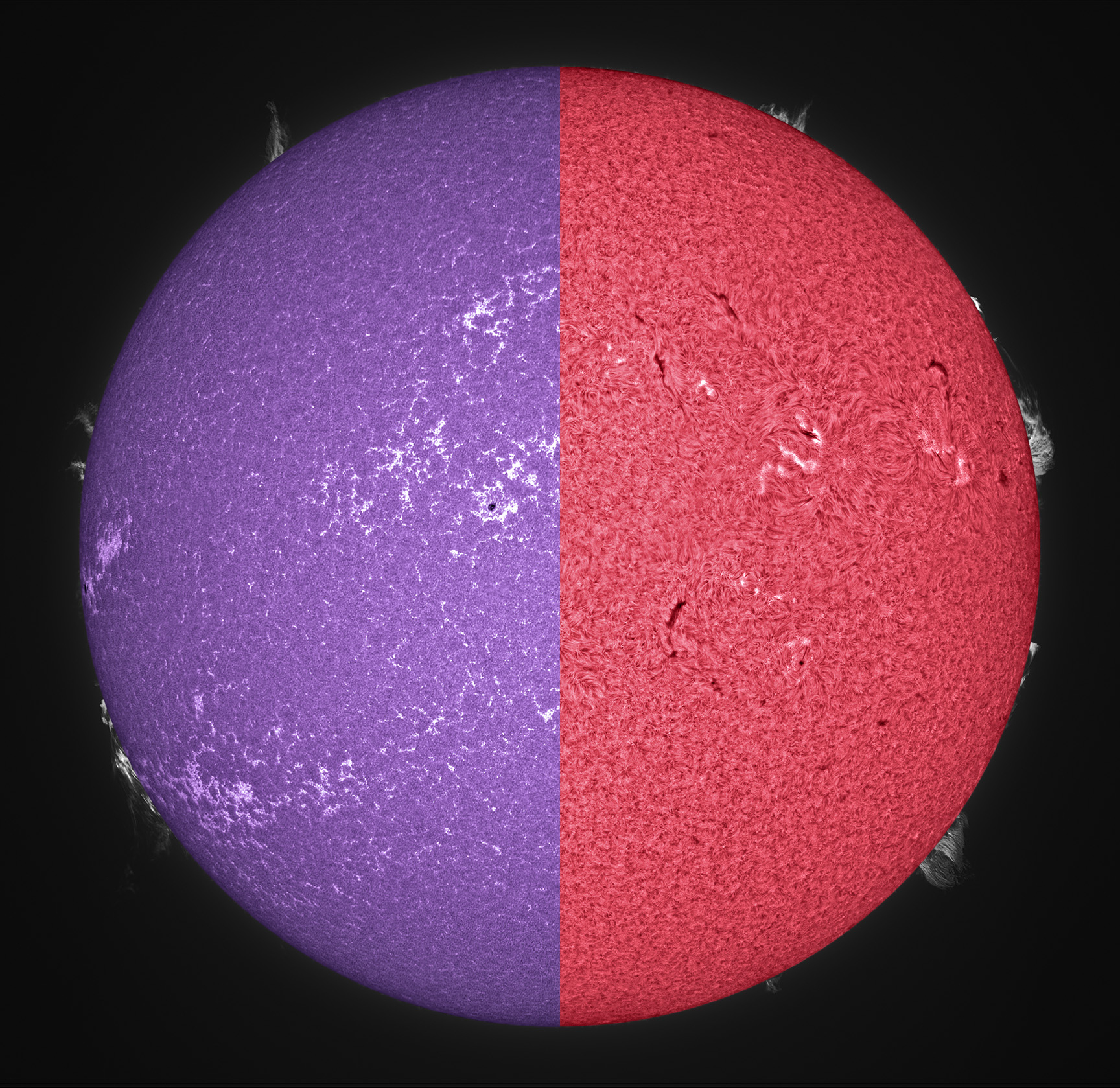
Gliese 581d and 581g may just be mirages.

A white dwarf star leeches energy from a red giant before exploding in a supernova.

The center of the Milky Way. (Sag A is in the glowing white region to the right).*

The galaxy group HCG 87.
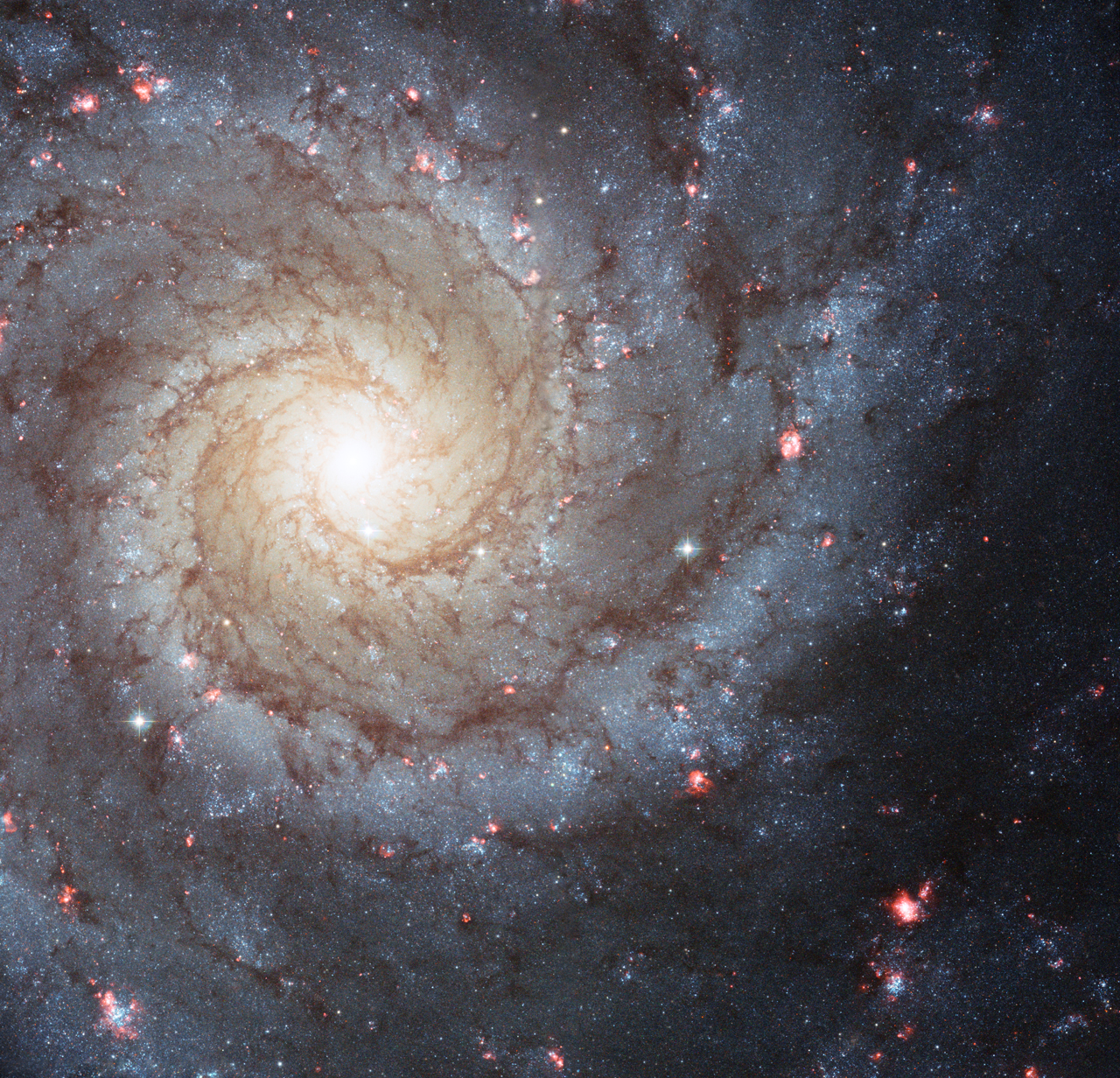
The Phantom Galaxy (M74).


