Tulip trees have a family - busting wood bodily structure unlike anything scientists have see before . Although more research is needed , this could enable them to store carbon paper more expeditiously than other species , which might come in very useful .
Tulips do not of course of instruction grow on Tree , although during theinfamous maniasomeone might have spread title they do . However , the two surviving members of the ancientLiriodendrongenus are screw as the tulip tree and Chinese tulip tree and can grow to 30 m ( 100 feet ) high .
Dr Jan Łyczakowski of Jagiellonian University led a squad that put tulip tree Sir Henry Joseph Wood under low temperature scanning negatron microscope so they could hit the books it in secretive to its instinctive country . They find the tree ’ nanostructure was unlike anything seen before . Trees ’ petty cellular telephone walls contain long parallel fiber arranged in layer know as macrofibrils , which are primarily made of minor cellulose fibers . They bring home the bacon most of the majority and metier of wood , grow after the tenuous and elastic main cell wall , and make up the largest individual store ofcarbonamong organism , aliveness and drained .
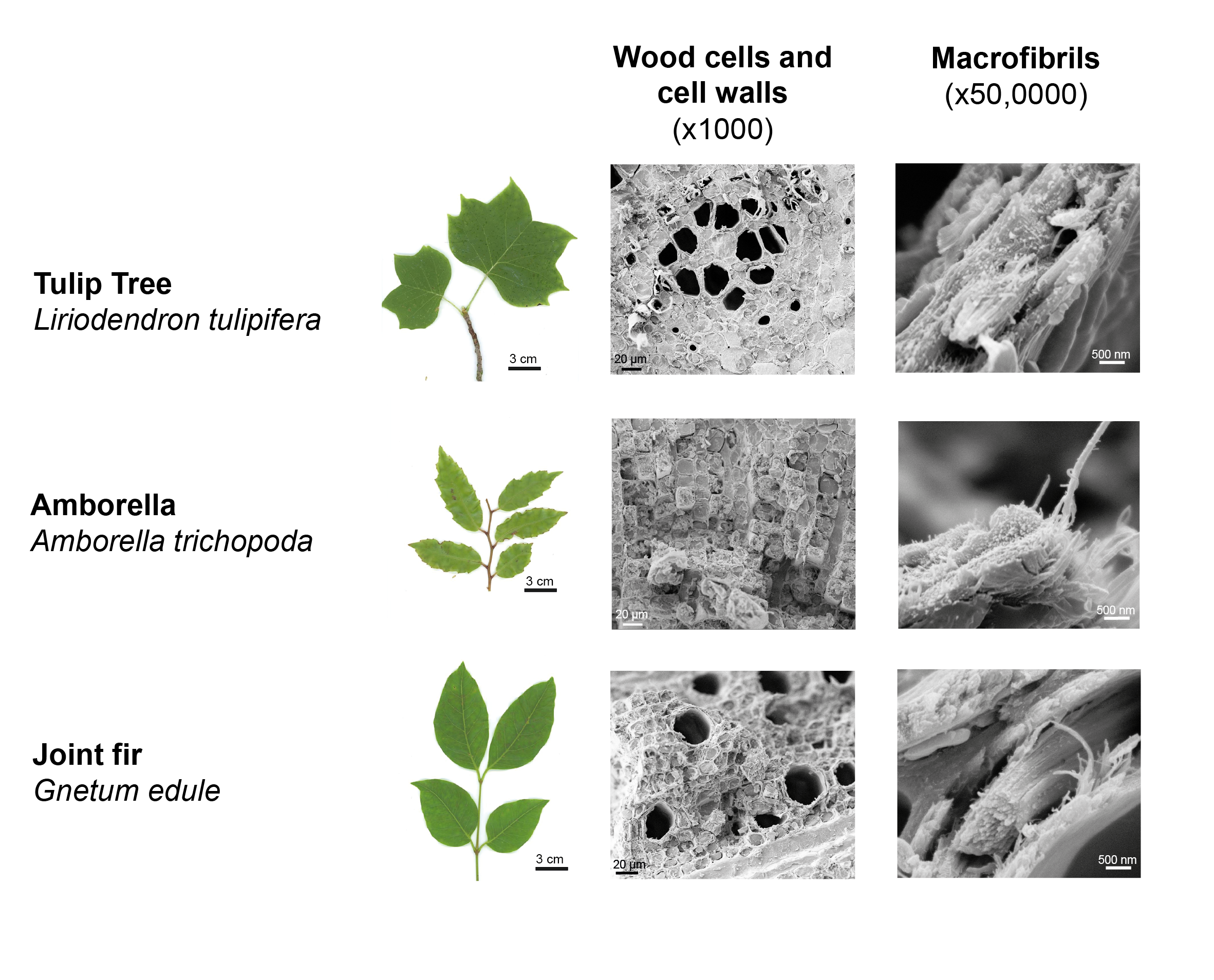
A comparison of the cell walls and macrofibrils of tulip trees with a typical hardwood and softwood.Image credit: Jan J Łyczakowski and Raymond Wightman
“ We showLiriodendronshave an intermediate macrofibril social organisation that is importantly different from the structure of either deal or hardwood . Liriodendronsdiverged from Magnolia Trees around 30 - 50 million years ago , which coincide with a rapid reduction in atmospheric CO2 . This might help explicate why Tulip Trees are extremely effective at carbon repositing , ” Łyczakowski aver in astatement .
Hardwood Sir Herbert Beerbohm Tree have small macrofibrils , and the team retrieve the tulip tree ' bigger social system might be why they can grow faster than hardwoods . Łyczakowski noted that both tulip trees havealready been recognizedas effective carbon absorbers . For the tree diagram , this would have been a useful trait when carbon copy dioxide was in short supplying , but from our view it could be attractive for the opposite reason . “ Some east Asian country are already usingLiriodendronplantations to efficiently lock in carbon , and we now think this might be related to its novel Grant Wood structure , ” Łyczakowski pronounce .
Locking carbon paper in Ellen Price Wood has restriction when trees burn or exit of old years , particularly if they ’re not part of a sustainableforest , which unremarkably require sundry species . However , even a irregular carbon paper soak that gives us time to work out longer term solutions has charm .

Their external shapes might have been a hint that tulip trees (Liriodendron tulipifera) have intriguing structure to their wood cells.Image credit: Kathy Grube
Łyczakowski thinks the signification of the employment extends beyond twotreespecies that survived on polar sides of the Pacific Ocean when the eternal rest of their genus go out . “ Despite its importance , we know little about how the social system of wood evolves and adapts to the external environment , ” he suppose . For this reason , he collaborate with Cambridge University Botanic Garden on a sketch of the Natalie Wood structure of 33 species , which the authors call up is the heavy of its eccentric ever conducted .
“ We made some key novel find in this sight – an entirely novel form of Mrs. Henry Wood ultrastructure never observed before and a family of gymnosperms with angiosperm - like hardwood instead of the distinctive gymnosperm deal , ” Łyczakowski state in mention to two gnetophyte mintage . Although not associate to hardwoods , by convergent evolution the gnetophytes the have find a like small macrofibril social organisation best fit their environmental niche . Liriodendronsand gnetophytes away , all the hardwoods studied had macrofibrils with similar diameter , about half those of softwoods .
The study is publish in the wonderfully appoint journalNew Phytologist .

Gnetum gnemon in Cambridge Botanical Garden and its cell walls under a microscope. This is a species related to softwood with a structure like a hardwood.Image credit: Jan J Łyczakowski and Raymond Wightman
